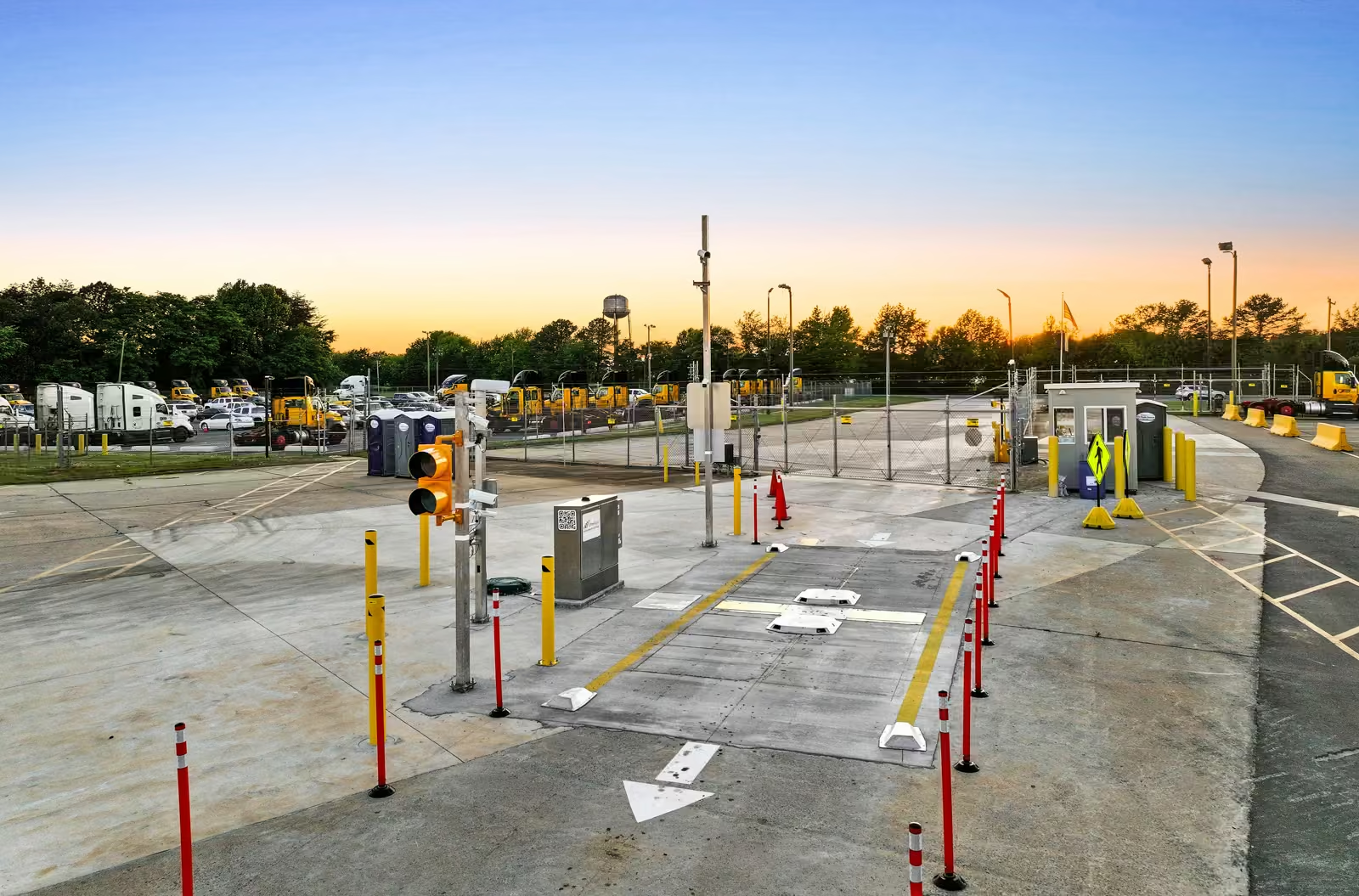
How WheelRight's Drive-Through Inspection Technology Works

Fleet operators have long accepted a frustrating trade-off: thorough vehicle inspections take time, and time is the one thing a busy depot can't spare. Manual tyre checks are slow, inconsistent, and prone to human error — and the tyres that matter most, the inner duals on a heavy axle, are often the ones a walkaround inspection misses entirely.
WheelRight's drive-through vehicle inspection technology removes that trade-off. Vehicles simply drive over the system at normal speed, and a complete inspection happens automatically — no stopping, no manual checklists, and no missed tyres. This article breaks down exactly how the technology works, what it measures, and why it's changing the way fleets approach vehicle safety and maintenance.
What Is Drive-Through Vehicle Inspection?
Drive-through vehicle inspection is an automated system that uses ground-based sensors and high-resolution cameras to assess vehicle and tyre health as a vehicle passes over it — typically while entering or leaving a depot. Instead of pulling a vehicle aside for a manual check, the inspection happens in the normal flow of operations, with results uploaded instantly to a digital fleet management portal.
For fleet operators, this means every vehicle can be inspected every time it moves through the yard, rather than relying on periodic manual checks that are easy to delay or skip when schedules get tight.
One Pass, Six Inspection Systems
WheelRight's core technology captures six categories of vehicle health data in a single drive-through pass:
Pressure in Motion
Underinflated tyres are one of the most common — and most overlooked — risks in fleet management, particularly on inner tyres that are nearly impossible to inspect visually. WheelRight's pressure-in-motion sensors require nothing fitted to the vehicle or tyre. Every drive-through becomes a full pressure check, with results flagged before the vehicle leaves the yard.
Tread Depth
High-resolution cameras and depth-measuring algorithms capture tread data across every tyre in a single pass, flagging any tyre approaching the legal tread depth limit before it becomes a compliance issue. Over time, this also builds wear-rate data by tyre brand and position, supporting smarter procurement decisions.
Tread Damage
Manual inspection misses more than it catches. WheelRight's cameras capture detailed tread images and analyze them against predefined thresholds, detecting chunking, tread separations, cuts, tears, and embedded objects — damage that can lead to a blowout if left unaddressed.
Weight in Motion
An overloaded axle is a safety hazard and a compliance risk. WheelRight's weight-in-motion system captures total vehicle weight and individual axle loads automatically on every pass. It's accredited to OIML R134, the international standard recognized by enforcement agencies worldwide, and is available as an add-on to the standard tyre inspection system.
Temperature
Tyres running hotter than normal on a given axle can signal a binding brake or a wheel bearing nearing failure. WheelRight's thermal monitoring compares readings across each axle and flags anomalies automatically, helping fleets catch mechanical issues before they cause a breakdown.
Asset Identification
An ANPR camera reads the number plate on every drive-through, while front and rear cameras capture each vehicle for remote site monitoring. For fleets running interchangeable trailers, WheelRight's Automatic Visual Fleet Recognition (AVFR) technology identifies each asset by fleet ID, ensuring every inspection is logged against the correct vehicle.
Why Automated Inspection Outperforms Manual Checks
Manual vehicle inspections depend on consistency, visibility, and time — three things that are hard to guarantee at scale. WheelRight's technology addresses each of those gaps directly:
- Consistency: Every vehicle is measured against the same thresholds, every time, removing the variability of human judgment.
- Visibility: Sensors and cameras detect issues — like underinflated inner tyres or early tread damage — that a visual walkaround simply can't catch.
- Speed: Inspections happen as vehicles drive through at normal speed, with results uploaded to the Fleet Portal instantly and alerts flagged before the vehicle goes back on the road.
Real Results from Real Operations
Across fleets using the system, WheelRight inspects more than 40 million tyres and 2.5 million vehicles annually. Of those inspections, roughly 1.16% trigger a red flag for a tyre-related issue — including pressure problems, tread depth concerns, and tread damage — catching problems before they become roadside incidents.
The Bigger Picture: Safety, Sustainability, and Savings
WheelRight's inspection technology isn't just about data collection — it's about what fleets can do with that data. Catching pressure issues early reduces fuel consumption and tyre wear, supporting sustainability goals. Flagging non-compliant tyres before a vehicle leaves the yard reduces the risk of roadside breakdowns and the costs that come with them. And because every inspection is automatic, fleets gain consistent compliance reporting without adding labor or downtime.
See WheelRight's Technology in Action
WheelRight's drive-through inspection system gives fleet operators a complete, automated picture of vehicle health — every tyre, every vehicle, every time a vehicle enters or leaves the depot. No manual checks. No missed inner tyres. No guesswork.
Ready to see how it fits your operation? [Explore WheelRight's full technology suite →] or [book an engagement with our team →] to discuss your fleet's needs.